

The worktop is the surface you will touch more than any other part of your kitchen, and the one that ties the doors, the sink and the splashback together. The four materials we fit most often are quartz, acrylic solid surface, sintered stone and porcelain. Each one is made to measure for your kitchen and cut around the sink, the hob and the shape of the room. Here is how they differ, and the questions we ask when helping people choose.
Quartz
Quartz worktops are engineered from crushed natural quartz bound with a small amount of resin. The result is very hard wearing, scratch resistant and non-porous, so it does not need sealing and spills wipe away. It comes in plain colours, soft veins that look like marble, and bolder patterns, with polished, honed or leathered finishes.
Good for: busy family kitchens, islands, and anyone who wants the look of marble without the upkeep.
Bear in mind: the resin means quartz does not like direct heat. Use a trivet for hot pans, and keep slow cookers and air fryers on a board.
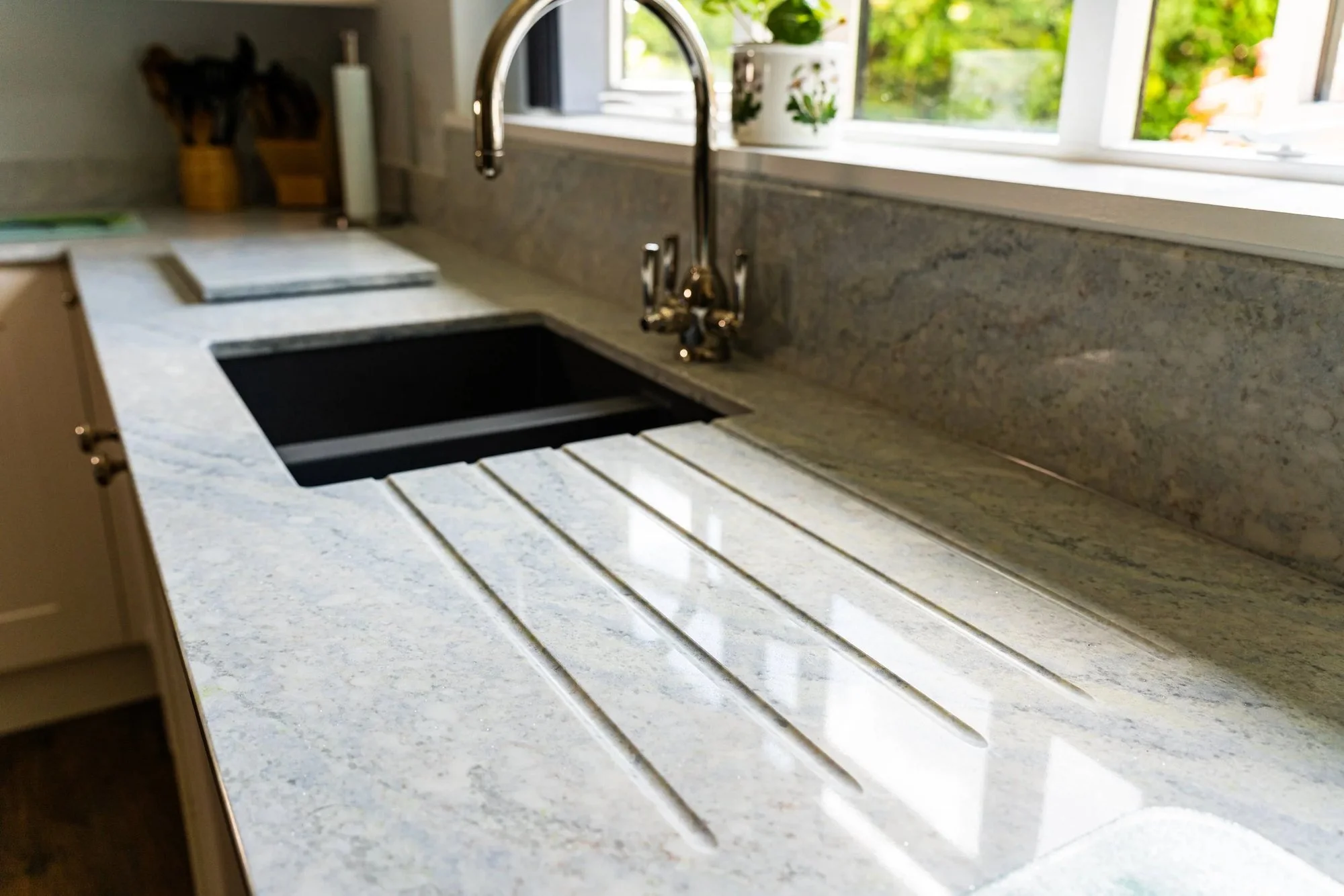
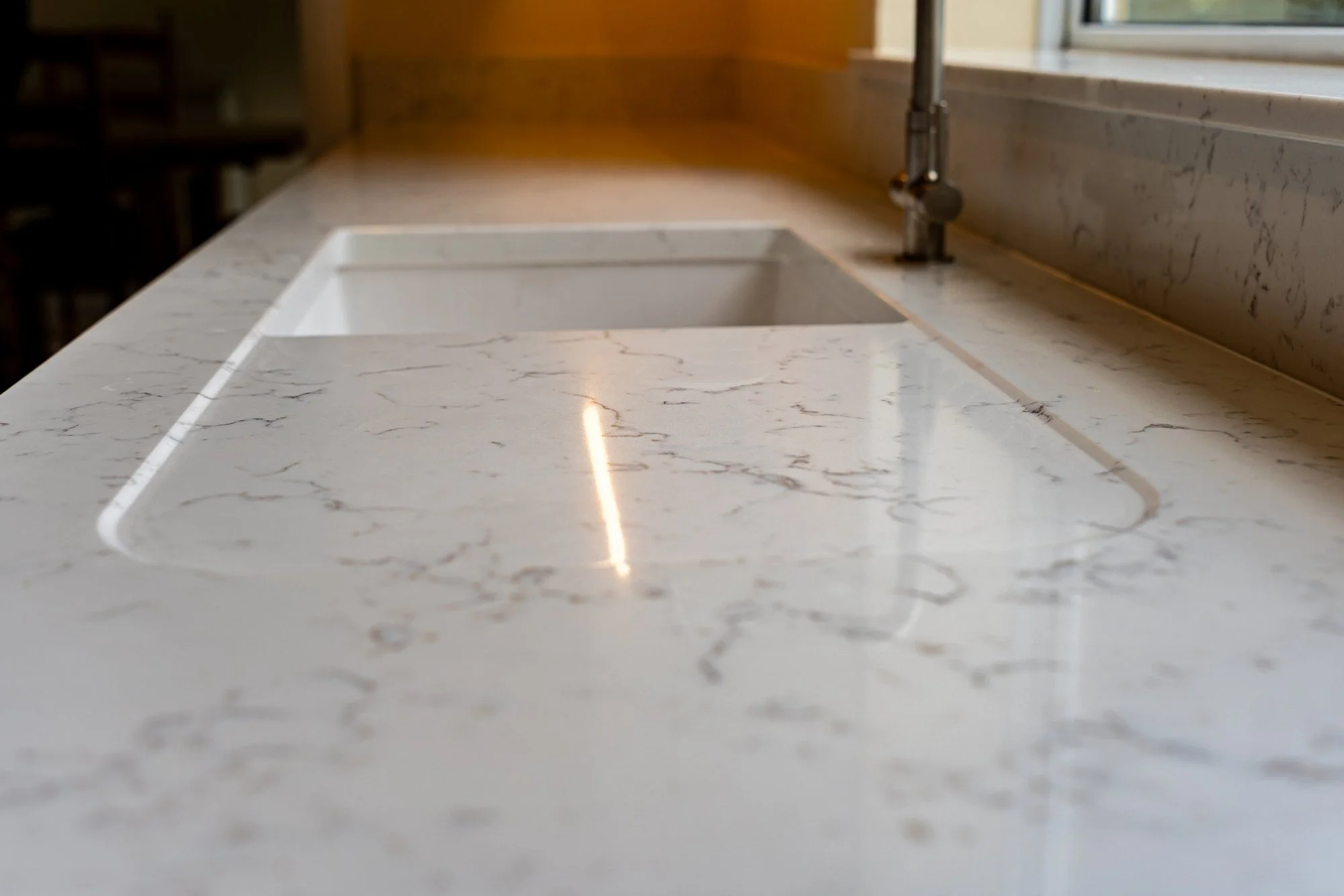
Some of the quartz we have fitted locally includes Carrara around an undermount sink in Thakeham, Pacific Blue with a drainer cut into the worktop in Storrington, and Santorini with a leathered finish on a large island. The Pacific Blue job was a worktop replacement only, which shows how much a new surface, sink and tap can change a kitchen while the cabinets stay put.
Acrylic solid surface
Solid surface is a blend of natural minerals and acrylic. It is non-porous, warm to the touch and, unlike any stone, it can be repaired: light scratches can be buffed out, and joins can be made almost invisible. It can also be shaped, so a sink or upstand can be formed from the same material as the worktop with no edge for dirt to collect in.
Well known names include Corian, Hanex, which is made by Hyundai L&C, and Mistral, whose 25mm worktops are solid all the way through with no substrate underneath.
Good for: integrated sinks, curved or unusual shapes, and low maintenance kitchens and bathrooms.
Bear in mind: it is softer than quartz or sintered stone, so a chopping board is a must and hot pans should never go straight on to it.
Sintered stone
Sintered stone is made from natural minerals fused under intense heat and pressure, with no resin at all. That makes it highly resistant to heat, scratches, stains and UV light, which is why it suits outdoor kitchens and sunny rooms as well as everyday cooking. Slabs are large and relatively thin, which gives a crisp, modern edge.
Good for: people who cook a lot and want a surface that shrugs off heat, and kitchens that open on to a garden.
Bear in mind: the edges and corners are harder to repair if a heavy pan catches them, so we often suggest a slightly eased edge. Ask whether the pattern runs through the slab or sits on the surface, as that affects how edges and cut outs look.
Porcelain
Porcelain worktops are made in a similar way, from fine clays and minerals fired at very high temperatures. They come in large slabs with bold, realistic veining, and they share sintered stone's resistance to heat, stains and scratches. In our two tone kitchen in West Chiltington, veined porcelain from Laminam wraps around an integrated downdraft hob, with a gold and grey vein running the length of the run.
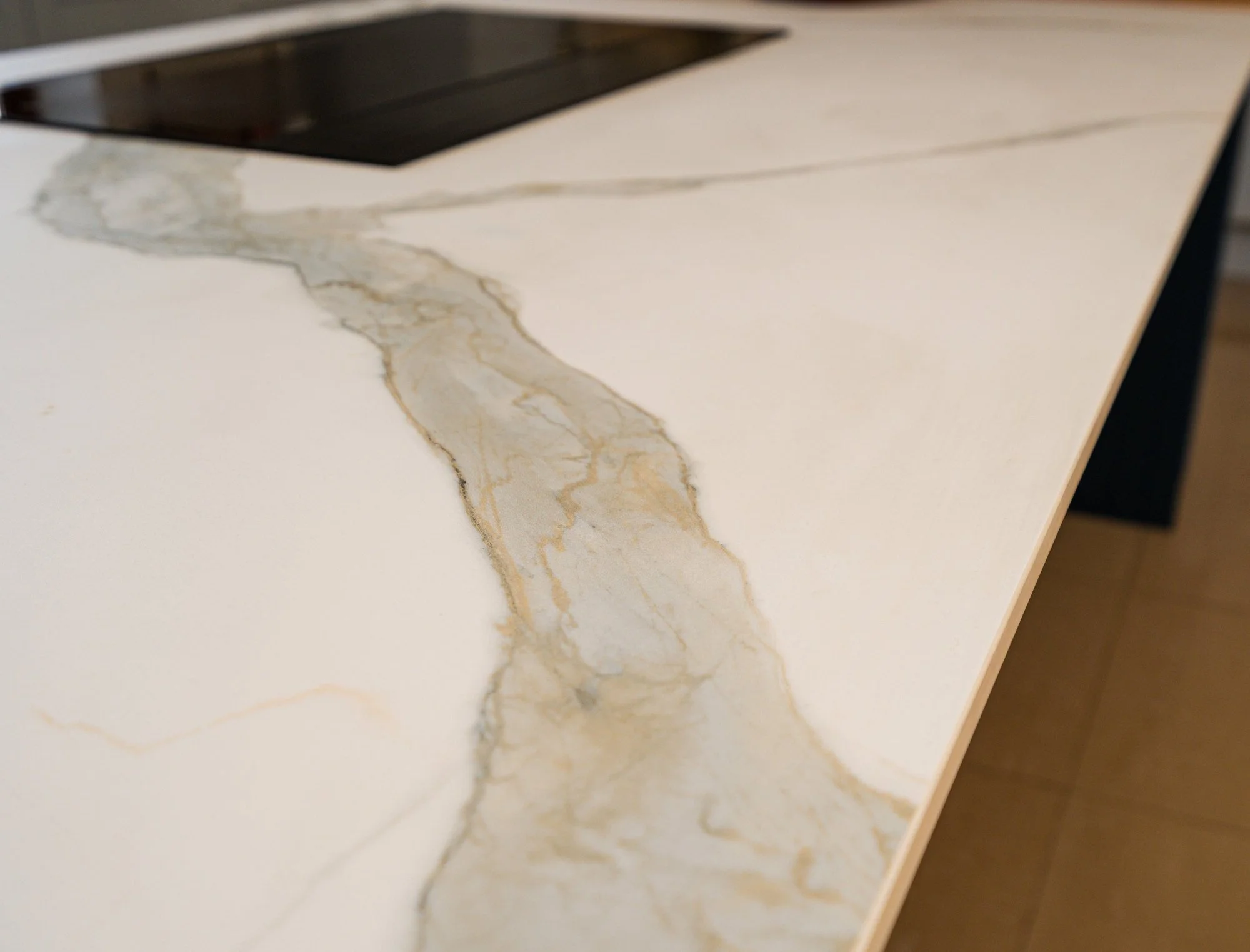
Good for: a statement island or run, and kitchens where a dramatic vein is the main feature.
Bear in mind: as with sintered stone, the edges want a little care, and it is worth seeing a full slab, not just a sample, before you commit to a strong pattern.
Other materials you might be weighing up
Laminate has improved a great deal and comes in a huge range of designs, though it will not take heat and joins are visible. Solid wood is warm and can be sanded back, but it needs oiling and does not love standing water near the sink. Granite and marble are natural stone with unique patterns. Granite is tough but needs sealing; marble is beautiful but stains and etches easily. Most people we talk to end up choosing one of the four materials above because they combine good looks with very little maintenance.
Questions to ask before you choose
- How do you cook? If hot pans regularly come off the hob in a hurry, sintered stone or porcelain will be the most forgiving.
- What thickness suits the style? 20mm reads lighter and more modern. 30mm feels more substantial, especially on an island or with a traditional kitchen.
- What happens at the sink? Undermount sinks look clean with stone and quartz, and grooves can be cut into the worktop for draining. Our sinks and taps page has sinks designed to sit with solid surface, quartz and stone.
- Upstands or a full splashback? Using the same material up the wall gives a tidy finish behind the sink and hob.
- How will it look with your doors? Veins and flecks have warm or cool tones. We will put samples next to your door colour and handles in the showroom.
How a worktop is made and fitted
We work with a specialist fabricator and installer. Once your cabinets are in place, their templaters visit to take exact measurements of the run, the sink, the hob and any awkward corners. The worktop is then cut in their workshop using waterjet machinery for clean, precise edges, finished and polished by hand, and fitted by their installers as part of your kitchen plan. Because templating happens after the units are installed, we build that time into the programme so you are never left without a kitchen for longer than necessary.
See them side by side
Worktops are much easier to choose in person. Our showroom at 17 West Street, Storrington, is open Monday to Thursday 10am to 5pm and Friday 10am to 4pm, and you are welcome to call in and look at samples next to door finishes. Saturday, evening and other out-of-hours appointments are by arrangement. There is more detail on our worktops page, finished kitchens on our projects page, and if you are still deciding on the shape of the room, our guide to kitchen layouts is a good place to start.
